




Guides and Inspiration
What Is a Kilim Rug? A Practical Buying Guide
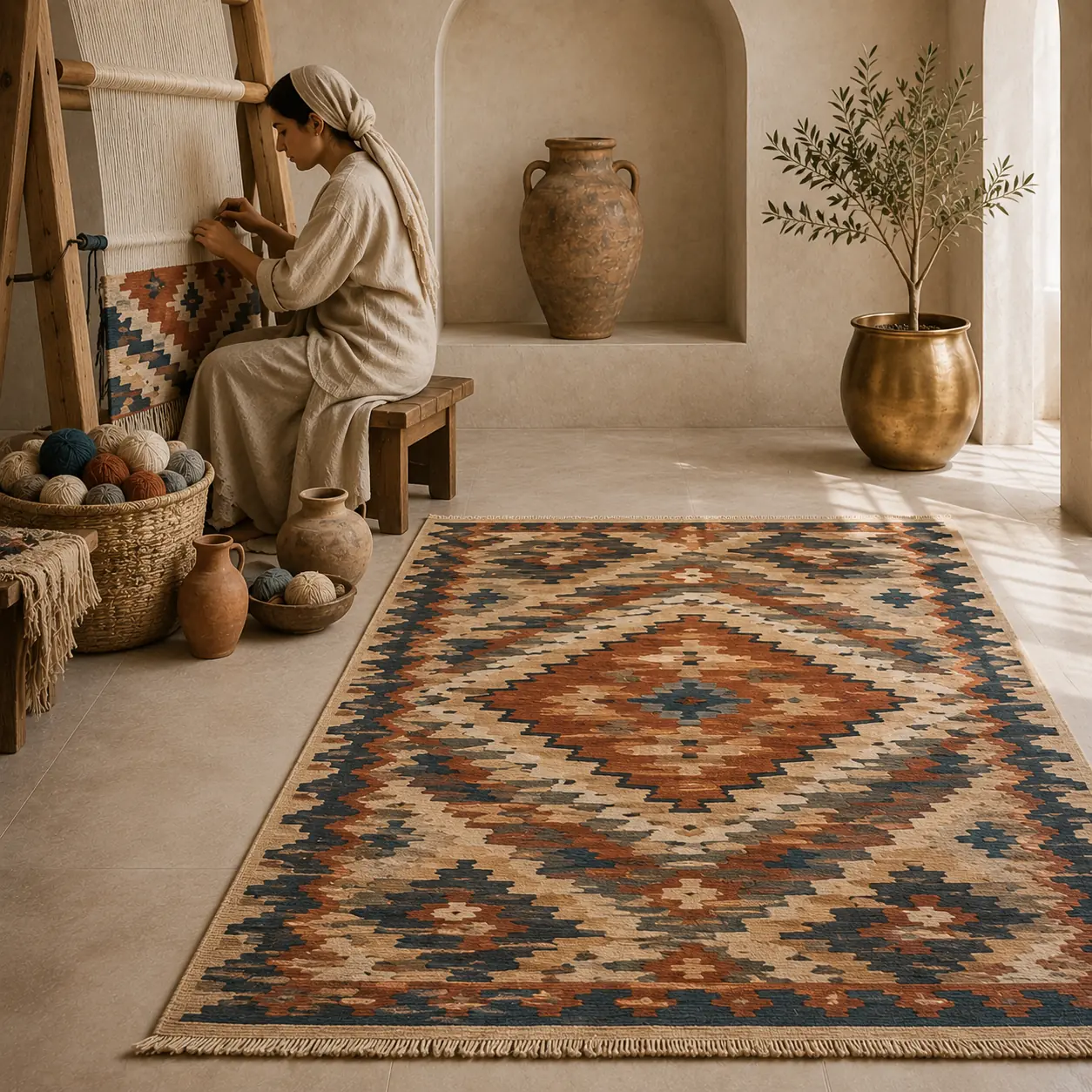
A kilim rug can bring colour and pattern to a living room, bedroom or hallway without the fluffy surface of a pile rug. Choosing one still means checking its weave, measurements and the way you use the room. This guide explains the practical differences and the details to confirm before buying a kilim.
What is a kilim rug?
A kilim is a flatwoven rug. It does not have the layer of knotted pile found on a hand-knotted pile rug; the pattern is formed through the weave. The name alone does not establish a country, age or fibre. Museum collections include kilims from different regions and made with different materials. For example, this kilim in the Metropolitan Museum of Art collection combines cotton, wool and silk. Check the origin and composition of the individual piece you are considering.
Kilim versus pile rug: what changes at home?
| Feature | Kilim | Pile rug |
|---|---|---|
| Surface | Flatwoven, without a layer of knotted pile | A surface of fibres with a variable pile height |
| Feel | The woven texture is more noticeable | May feel softer or more cushioned, depending on the fibres and density |
| Positioning | Check stability and edges | Also check thickness beneath doors and furniture |
| Care | Depends on fibres, dyes and the condition of the weave | Depends on those details and the pile structure |
A kilim can be handmade: “kilim” and “handmade” are not opposing categories. To compare production methods, read our handmade versus machine-made rug guide.
Choosing a kilim for your living room
Start with the sofa and armchairs. Mark the proposed outline on the floor and check whether the rug connects the seating area. A strong geometric pattern can become the room’s focal point. Compare it with the curtains, upholstery and other textiles. If you already have several patterns, try a more limited palette or a design that repeats one existing colour.
Look at photographs of the whole piece and close-ups of the weave. Lighting and screens can change how colours appear. Use our room-by-room rug size guide for measurements and our living room rug guide for placement and styling.
Will it work in a hallway, bedroom or dining area?
In a hallway, test door clearance and your everyday walking route. In a bedroom, consider the texture you want underfoot when you get out of bed. Beneath a dining table, pull the chairs back and check whether their legs catch the edge or weave. Choose around actual use as well as the appearance of a styled room.
A suitable non-slip underlay can help with stability. Confirm that it works with both the rug and the floor finish. If you have underfloor heating, ask about compatibility for the rug and underlay together. A thin construction alone does not establish suitability.
Six checks before buying a kilim
- Exact dimensions: ask whether the measurements include the fringes.
- Fibre composition: do not assume every kilim is wool.
- Origin and construction: look for explicit information in the product description.
- Condition: ask about edges, fringes, wear and any repairs.
- Photographs: compare the front, reverse and close-ups; do not assume both sides are suitable for use.
- Care: request guidance for the actual piece before applying water or cleaning products.
How to care for a kilim
Follow the instructions for the individual rug. Keep fringes out of a vacuum’s rotating brush and avoid rubbing a mark before you know how the fibres and dyes will respond. A flat weave does not automatically make a rug suitable for machine washing or steam cleaning. For a delicate, old or repaired piece, seek an assessment from a rug specialist. Our rug care guide explains further checks.
Frequently asked questions about kilim rugs
Is every geometric rug a kilim?
No. A pattern does not establish the weaving technique. Check the construction and the product description.
Is every kilim a Persian rug?
No. The term describes a type of woven textile; it does not certify Iranian origin. Check the provenance of each piece.
Can I use a kilim on both sides?
Check the actual rug. Finishing, repairs or the condition of one side may limit its use.
Browse our kilim collection or compare it with our handmade rugs. Choose the dimensions, texture and intended use first, then confirm the details of the individual product.

